
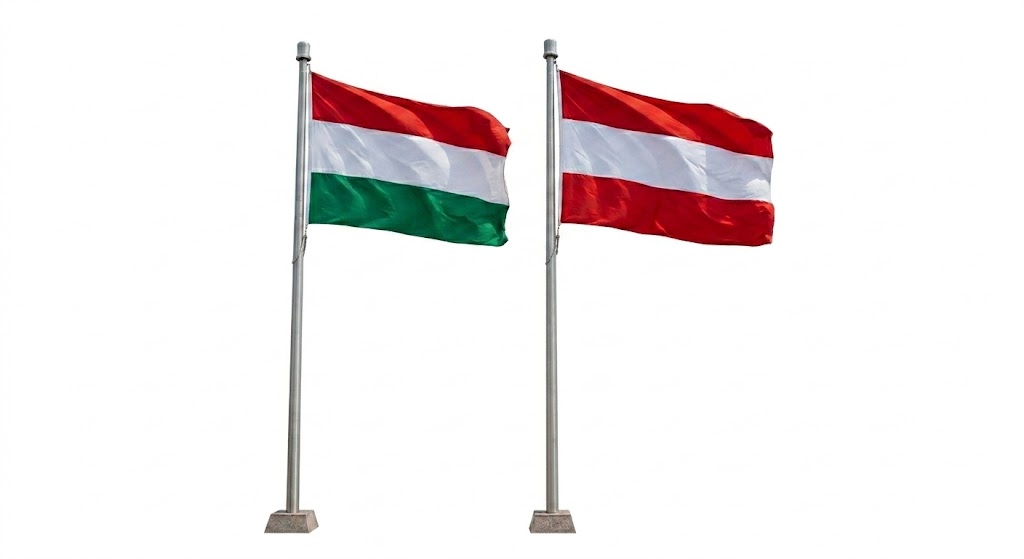
On Thursday, Austrian Chancellor Christian Stocker extended a warm welcome to Hungarian Prime Minister Péter Magyar in Vienna, as the neighboring nations expressed intentions to enhance cooperation and revitalize their bilateral ties. This visit marked Magyar’s second official trip abroad since he assumed office, underscoring its significance in Hungary’s foreign diplomacy. The Hungarian prime minister’s delegation included key figures, such as ministers overseeing foreign affairs, economic development, transport, and environmental policies, reflecting the broad scope of discussions anticipated during the visit.
Prime Minister Magyar, during a joint press conference, emphasized Hungary’s dedication to playing a more constructive role within the European Union while steadfastly safeguarding its national interests. He highlighted the necessity of engaging actively in European institutions and nurturing regional alliances. Chancellor Stocker, on his part, lauded Magyar’s electoral victory as a momentous symbol and expressed optimism that closer ties between Austria and Hungary could bolster Central Europe’s collective influence within the EU framework.
The two leaders announced plans for a joint cabinet meeting in September in Gödöllő, Hungary, aimed at enhancing political and economic cooperation. Additionally, Magyar unveiled aspirations to convene a regional summit involving Visegrád Group nations, with potential participation from neighboring countries like Austria, Croatia, Romania, and Slovenia. Key topics of discussion during their talks included migration, energy policy, and regional security, with both governments advocating for reinforced collaboration on border management and expedited EU expansion into the Western Balkans.
In terms of energy strategies, Austria and Hungary called for the development of cross-border infrastructure and diversified supply chains. They also deliberated on significant transport initiatives, such as upgrading rail connections between Budapest and Vienna and extending road networks towards Austria. Economic relations featured prominently in the dialogue, particularly concerning Hungary’s special taxes impacting Austrian enterprises. Prime Minister Magyar acknowledged Hungary’s challenging fiscal conditions and expressed the government’s commitment to fostering a transparent, growth-oriented economic landscape to attract high-value foreign investments.
Environmental issues, notably the controversy over asbestos-laden stone shipments from Austrian quarries to western Hungary, were also on the agenda. Magyar announced the formation of a joint Austrian-Hungarian commission tasked with investigating the matter and overseeing remediation efforts. Chancellor Stocker assured Hungary of Austria’s cooperation, pledging support from Austrian authorities in addressing these environmental concerns.