
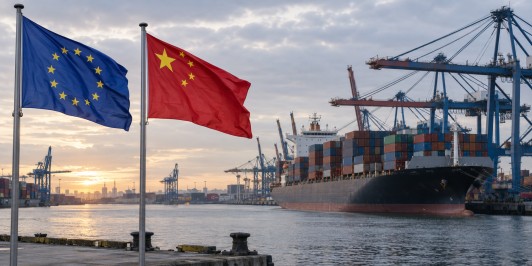
The growing trade imbalance between the European Union and China has reached a notable peak, with the EU’s trade deficit with China swelling to €36.5 billion in July 2026. This disparity underscores a significant economic challenge, as the EU imported nearly three times more goods from China than it exported. Such figures have prompted EU officials to contemplate strategies to rebalance this economic relationship.
According to Eurostat data, the EU’s imports from China increased by 8% year-on-year, reaching €53.9 billion in July. In contrast, exports from the EU to China experienced a decline, dropping 1.6% to €17.4 billion. This growing gap marks an increase from the €32.3 billion deficit recorded in July 2025, highlighting a persistent trend of imbalance in goods trade between the two economic giants.
From January to July 2026, the cumulative trade deficit between the EU and China reached approximately €234 billion. This widening gap has intensified pressure on European policymakers to seek greater balance in trade relations. The EU is exploring measures to target imports in specific sectors, including hybrid vehicles and chemicals, to address this issue.
The surge in hybrid vehicle imports from China is notable, especially following the EU’s introduction of additional tariffs on Chinese electric vehicles in 2024. These tariffs did not extend to hybrid models, resulting in a sharp increase in their importation. In response, EU officials are considering negotiating voluntary limits on these imports as a means to alleviate trade tensions.
Trade relations with China are expected to remain a central topic in upcoming discussions between the EU and China. Brussels is keen to enhance European exports while reducing dependency on Chinese products, particularly in strategic sectors. As these negotiations unfold, the EU aims to address the economic challenges posed by the current trade dynamics with China.