
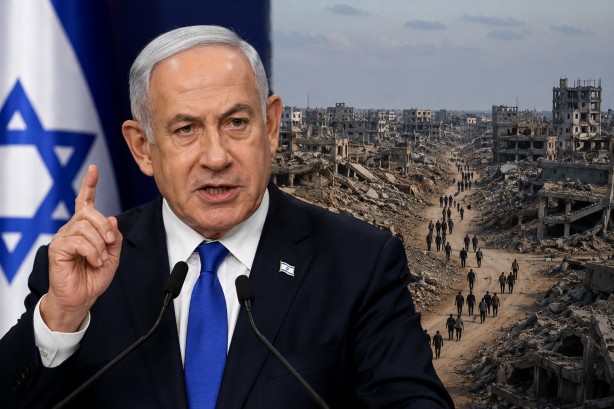
In a firm stance against a US-supported proposal, Israeli Prime Minister Benjamin Netanyahu has declared that Israeli military forces will not withdraw from Gaza until Hamas is fully disarmed. Netanyahu’s decision comes amid concerns from Israeli officials who cite intelligence reports indicating that Hamas continues to bolster its ranks, rebuild its military capabilities, and stockpile weapons. The Israeli government argues that an early withdrawal could enable Hamas to regain its foothold in Gaza, potentially exacerbating security challenges.
The US-brokered ceasefire proposal offers a comprehensive framework aimed at achieving lasting peace. It envisions Hamas laying down its arms, dismantling its extensive network of tunnels, and a phased pullback of Israeli troops. The plan also outlines the formation of a Palestinian technocratic government, the introduction of an international security force, and a strategy for the reconstruction of Gaza. However, Netanyahu’s rejection of this proposal underscores the complexities and deep-seated mistrust that characterize the Israeli-Palestinian conflict.
Amid ongoing hostilities, Israeli airstrikes have resulted in significant casualties, with reports indicating at least 17 deaths, including children, in the past few days. In a separate incident, Palestinian communities held a mass funeral to mourn those lost after over 100 bodies were retrieved from the debris of a significant Israeli airstrike in Gaza City’s Sabra neighborhood. This strike, which occurred in November 2023, has left many victims still unaccounted for, as rescue teams persist in their efforts to locate and recover those trapped beneath the ruins.
The current conflict traces back to a violent escalation initiated by Hamas on October 7, 2023, when they launched an assault on southern Israel. This attack led to the tragic loss of approximately 1,200 lives and the abduction of 251 hostages, setting off the ongoing military confrontation in Gaza. The ensuing war has further strained already fragile relations and amplified the humanitarian crisis in the region.