
Germany’s political landscape is experiencing significant shifts as recent regional elections in Berlin and Mecklenburg-Western Pomerania revealed growing political divides. The central development in these elections was the strong performance of the Alternative for Germany (AfD), which has gained considerable traction in parts of the country, particularly in the east, posing challenges for the traditional parties.
In Berlin, the left-wing Die Linke party emerged as the frontrunner, capturing approximately 25.7% of the vote, surpassing Chancellor Friedrich Merz’s Christian Democratic Union (CDU), which secured 18.8%. Meanwhile, the AfD finished third with 16.3% of the vote, highlighting its rising influence even in traditionally less supportive regions like the capital.
Mecklenburg-Western Pomerania painted a different picture as the AfD seized the largest share of the vote, obtaining about 38.2%. This narrow victory over the Social Democrats, who received 35.5%, underscored the party’s growing appeal in eastern Germany. The CDU, however, suffered a significant blow, garnering only 4.9% of the vote, thereby failing to meet the 5% threshold required for representation in the state parliament.
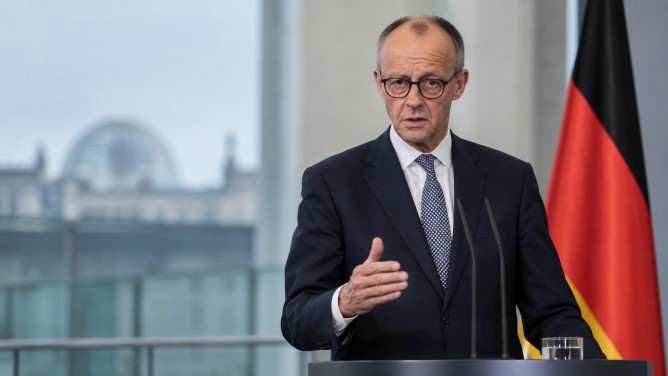
The electoral outcomes have intensified the pressure on Chancellor Merz, especially following the AfD’s prior success in Saxony-Anhalt earlier this month. Despite these setbacks, Merz has vowed to remain in office, emphasizing his commitment to continuing with his government’s economic and social reform agenda.
These election results have sparked a broader conversation within Germany about the changing political dynamics and the increasing polarization across its regions. The CDU must now grapple with internal debates over its leadership and strategy to address the AfD’s rising popularity, as the political landscape continues to evolve amid these new challenges.