
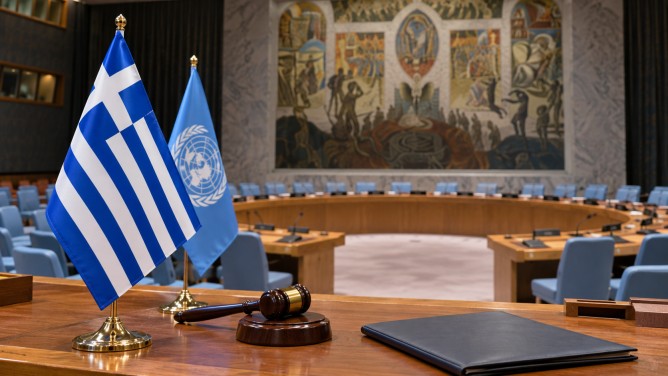
On October 1, Greece took over the rotating presidency of the United Nations Security Council, marking its second and final term during the 2025–26 tenure as an elected member. This pivotal role places Greece at the helm of discussions on pressing international conflicts and issues throughout October.
Under the leadership of Greece’s Permanent Representative to the UN, Ambassador Aglaia Balta, the 15-member council will navigate complex global challenges. Key topics on the agenda include the ongoing war in Ukraine, the volatile situation in Gaza, tensions involving Iran and the Strait of Hormuz, the conflict in Sudan, and the security crisis in Haiti. These discussions are crucial as they address some of the most urgent threats to international peace and security.
Particularly concerning Haiti, the Security Council is expected to continue its involvement in efforts to stabilize the region. An international security force is already on the ground, working to curb armed violence ahead of the forthcoming elections, reflecting the council’s commitment to restoring stability in the country.
Greece’s presidency coincides with significant deliberations regarding the selection of the next UN secretary-general. The Security Council holds the responsibility of recommending a candidate to the General Assembly, with the new secretary-general slated to take office on January 1, 2027. This adds another layer of importance to Greece’s current leadership role within the council.
The month-long presidency offers Greece a strategic platform to influence discussions and decisions on these critical issues, highlighting its diplomatic role on the international stage. As the world watches, the outcomes of these discussions will potentially shape global dynamics in the months and years to come.