
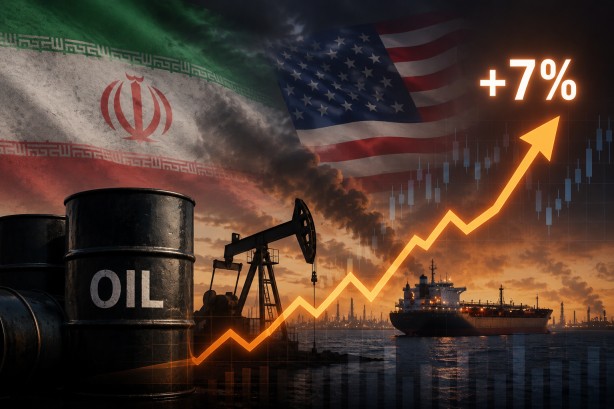
Tensions in the Middle East have pushed global oil prices dramatically higher, with Brent crude spiking nearly 8% to approximately $90.75 per barrel and West Texas Intermediate (WTI) climbing almost 7% to around $84.76 per barrel. This surge follows escalating military confrontations involving Iran, the United States, and Saudi Arabia, which have ignited fears of significant disruptions to worldwide energy supplies.
The situation intensified as Iran’s Islamic Revolutionary Guard Corps (IRGC) reportedly fired ballistic missiles at U.S. military installations in Jordan, a move they claim was in retaliation to recent American military operations. In response, U.S. and Saudi Arabian forces launched coordinated assaults on Iran-backed militant positions within Iraq. These attacks were said to be aimed at logistics and weapons facilities linked to ongoing drone assaults targeting military and energy sites.
Increasing concerns over maritime security have added another layer of complexity to the conflict. The IRGC announced that its naval forces had intercepted and attacked three oil tankers in the strategic Strait of Hormuz, accusing them of disregarding navigation warnings. In a separate incident, the Houthi rebels of Yemen claimed responsibility for an attack on a Saudi-linked oil tanker in the Red Sea, compounding the risks faced by commercial shipping in the region.
The unrest has heightened worries about possible supply interruptions through the Strait of Hormuz and the Bab el-Mandeb Strait, critical channels for the global energy trade. Analysts have cautioned that if these attacks on shipping and energy infrastructure persist, oil prices could remain elevated, leading to increased volatility across international markets.