
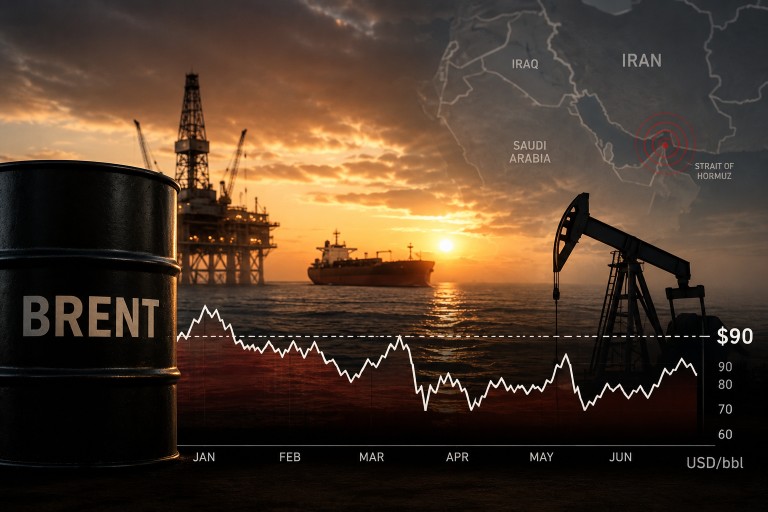
Despite recent geopolitical tensions and a notable surge in oil prices, Brent crude remains below the $90-per-barrel mark. On Friday, the global oil benchmark hovered around $85 per barrel, marking an 11% increase over the week, its largest since April. Meanwhile, the US benchmark, West Texas Intermediate, was nearing $80 per barrel. The uptick in prices follows heightened military tensions between the United States and Iran, which have disrupted supply routes in the Middle East and slowed down tanker traffic through the Strait of Hormuz, a critical passageway for about 20% of the world’s oil supply.
Nevertheless, Brent crude has found resistance in breaking past the week’s peak of $87.55 per barrel. This is occurring even as the conflict’s impact has spread across the region, further hindering tanker movements through the strategically vital Hormuz Strait. Analysts attribute the relatively stable oil prices to market expectations that diplomatic negotiations might still emerge, tempering the rise in oil prices. Observers are closely monitoring global oil inventories for signs of substantial decline and assessing whether the disruptions in Hormuz will persist.
While military tensions have escalated, the oil market’s response has been more restrained, with Brent trading within a limited range recently. This trend suggests that investors are somewhat optimistic about the potential for easing tensions, rather than an escalation. The Strait of Hormuz continues to be a focal point for energy markets, with tanker movements slowing and exporters increasingly turning to alternative routes to mitigate reliance on this critical channel.
The effects of the current situation extend beyond crude oil prices. In the United States, refining margins have increased as supplies of diesel and gasoline become tighter, reflecting a similar strain in European fuel markets. The reduction in Russian fuel exports has compounded the pressure on global energy supplies, adding another layer of complexity to the situation.
Market attention is now concentrated on two main factors: whether oil inventories will drop sufficiently to indicate a supply shortage and if diplomatic efforts to resolve the tensions will falter, potentially leading to a more prolonged disruption in the Gulf. Until these scenarios develop, analysts predict that Brent crude will continue to trade below $90 per barrel, even amid the ongoing geopolitical risks.