
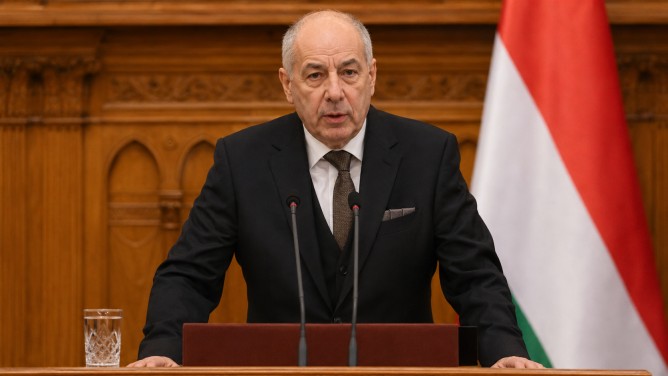
In Hungary, a constitutional conflict is brewing following the approval of an amendment by lawmakers that would cut short President Tamás Sulyok’s current term. The legislative change, driven by the parliamentary majority, mandates that the standing president must sign the amendment for it to become valid. This condition has led to a legal impasse, as President Sulyok’s endorsement of the amendment would essentially mean the end of his tenure.
During a ceremony commemorating the “Day of the Courts,” President Sulyok addressed the importance of upholding the rule of law and maintaining judicial independence, stressing that legal standards should not be swayed by political motives. His statements are being interpreted as a direct response to the constitutional crisis looming over his presidency. The president’s office has also urged adherence to constitutional norms and cautioned against the unchecked exercise of parliamentary authority.
According to legal experts, President Sulyok’s avenues for action are restricted under the current Hungarian constitution. He retains the option to submit the amendment to the Constitutional Court for examination on procedural grounds. However, should the court determine that there are no legal issues with the amendment, he would then be compelled to sign it into law. In a situation where the president chooses not to endorse the amendment, parliamentarians could potentially initiate impeachment procedures or declare him incapacitated, which would enable the speaker of parliament to assume presidential duties and sign the legislation.
The amendment proposal has sparked broader discourse about the state of the rule of law in Hungary, with legal analysts highlighting that any constitutional revisions should uphold legal certainty and preserve the autonomy of public institutions. This ongoing debate underscores the tension between legislative power and constitutional fidelity in the country.